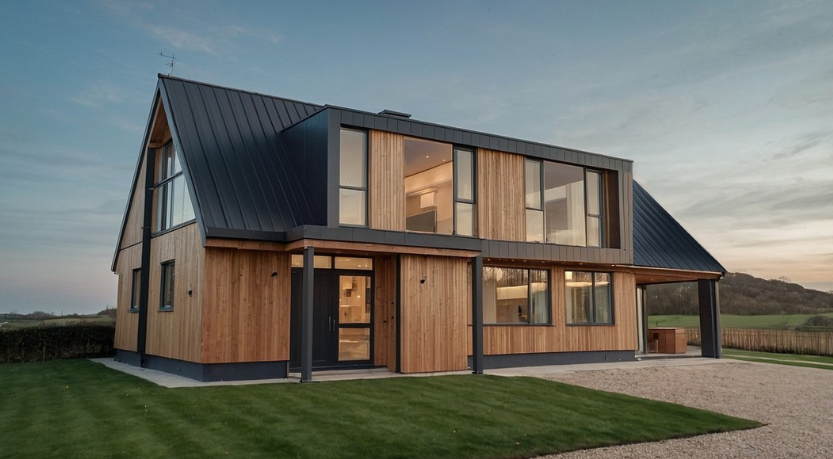
Commercial & Residential Architectural Feasibility Study Service
Know What Is Possible Before You Commit
Most building projects start not with drawings but with a question. Is this possible?
What could I actually do here? How much would it realistically cost? An architectural feasibility study is how you get clear, honest answers to those questions before spending significant time or money on a full design.
At Dennis Hellyar Architects, we offer an architectural feasibility study for both residential and commercial clients across South Wales and the South West. Whether you are a homeowner wondering whether an extension is feasible, a developer assessing a site, an organisation planning a masterplan or major refurbishment, we give you the information you need to make confident decisions at the earliest stage.

What Is an Architectural Feasibility Study?
An architectural feasibility study is an early-stage assessment of a property or site that establishes what is realistically achievable before any detailed design work begins. It typically involves a site visit, a review of the relevant planning policies and constraints, and an assessment of the design options that are likely to be viable. The output is a clear picture of what is possible, what the likely planning implications are, and what a project might involve in terms of scope, cost and programme.
An architectural feasibility study is not a planning application and it does not commit you to anything. It is a decision-making tool: the information you need to decide whether to proceed, and if so, in which direction.
Who Is an Architectural Feasibility Study For?
A feasibility study is useful for anyone who needs clear architectural and planning advice before committing to a project. Here are the most common situations where we carry out feasibility work:
Residential clients
Homeowners considering an extension: you want to know whether your plans are realistic, what planning permission you might need, and roughly what it will involve before investing in full architectural drawings.
Property buyers: you are considering purchasing a property with development potential and want an independent assessment of what is achievable before you exchange.
Self-builders: you have a plot or are about to acquire one and want to understand what design options are possible within the planning constraints of the site.
Owners of listed buildings or properties in conservation areas: you need specialist advice on what alterations are likely to be acceptable before committing to a design direction.
Commercial clients
Businesses considering a remodel or relocation: you need to understand what your current premises could accommodate, or whether a new site meets your operational requirements, before making a significant financial commitment.
Developers and landowners: you are assessing the development potential of a site and need an architect's view on what is likely to gain planning permission and what scale of development is realistic.
Housing associations and councils: you are exploring the masterplanning or pre-procurement stage of a housing, regeneration or community project and need credible early design evidence to support a funding application or business case.
Charities and community organisations: you are planning a refurbishment or new facility and need to understand what is achievable within a constrained budget before approaching funders or boards for approval.
What Our Architectural Feasibility Study Covers
Every architectural feasibility study we carry out is tailored to the specific property, site and client brief. Depending on the scope of your project, our feasibility work typically includes some or all of the following:
Site visit and property assessment: we visit your property or site in person to understand its character, condition, constraints and potential. There is no substitute for seeing a place first-hand.
Planning history review: we check the planning history of the site, including any previous applications, decisions and conditions that may affect what is possible.
Planning policy assessment: we review the local planning policies that apply to your site, including the relevant Local Development Plan, any conservation area designations, listed building status, AONB or Heritage Coast constraints, and national planning guidance.
Permitted development analysis: we assess whether your proposals could be carried out under permitted development rights without a formal planning application, or whether full permission would be required.
Outline design options: we develop one or more outline design options that illustrate what could be achieved on the site, giving you a tangible sense of the possibilities without committing to a detailed design.
Masterplanning and site strategy: for larger or more complex sites, we can develop a broader masterplan framework alongside the feasibility assessment, testing how a site could be laid out and phased to inform early decisions about density, access and mix of uses.
Planning outcome assessment: we give you our honest view of the likely planning outcome for each design option, based on our knowledge of local planning policy and our experience with the relevant local authority.
Indicative cost and programme guidance: we provide indicative cost and programme guidance to help you understand the likely financial and time implications of the project at this stage.
Written advice note or summary report: we produce a clear written summary of our findings and recommendations, giving you a record of the advice you can refer back to and share with other stakeholders.
Why an Architectural Feasibility Study Is Worth Doing First
It is tempting to skip straight to the full design, especially when you have a clear picture in your mind of what you want. But investing in feasibility at the start almost always saves time, money and frustration later. Here is why.
-
It prevents wasted spend on designs that face planning problems
The most common and costly mistake in architecture is commissioning detailed drawings for a scheme that turns out to have a fundamental planning problem. A feasibility study identifies those issues early, before significant design fees have been spent. If there is a problem, it is far better to find out at the feasibility stage than after you have paid for full planning drawings.
-
It gives you a realistic budget foundation
Many clients come to us with a rough budget in mind, but without a clear sense of what that budget can actually deliver on their specific site. An architectural feasibility study gives you an early read on the likely scope and cost of a project, so you can make an informed decision about whether to proceed and what level of ambition is realistic within your means.
-
It identifies the best design approach from the start
There is rarely only one way to achieve what a client wants. A architectural feasibility study explores the options and identifies the approach most likely to succeed from both a design and planning perspective. Getting this right at the start means the detailed design work that follows is built on solid foundations, rather than being reworked when problems emerge later.
-
It gives commercial clients the evidence they need
For housing associations, councils, charities and other organisations, early design evidence and masterplan thinking is often a requirement of funding applications, board approvals and procurement processes. A feasibility study from a RIBA chartered practice provides the credible, professional evidence that stakeholders and funders expect to see at the pre-commitment stage.
-
It is a low-commitment, high-value starting point
An architectual feasibility study is one of the most cost-effective investments you can make in a building project. The fee is modest relative to the total cost of a project, but the value of the information it produces is significant. At the very least, it gives you clarity. At best, it shapes a better project and saves you from expensive mistakes.
From Feasibility to Full Architectural Service
A feasibility study is often the beginning of a longer relationship. Once you have a clear picture of what is possible, the natural next step is to develop that into a full project. Not every feasibility study leads to a full project with us, and that is fine. The value of the study stands on its own. But when clients are ready to move forward, we are ready to help. Here is how our other services connect to the feasibility stage:

House Extension Design
If your feasibility study confirms that an extension is viable, we move into the design stage. We develop the scheme in detail, working closely with you to refine the layout, materials and detailing until the design is exactly right. Our extension design service covers everything from initial concept through to planning-ready drawings.
Planning Drawings and Applications
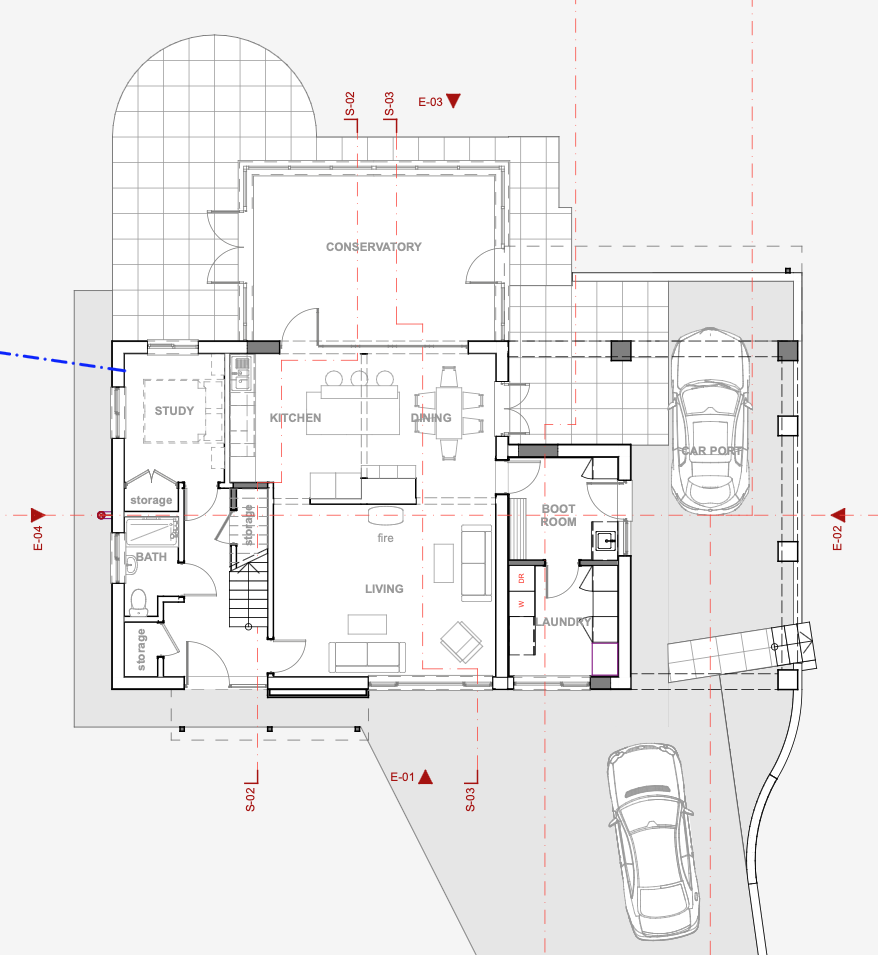
Once the design is agreed, we prepare professional planning drawings and supporting documents and manage the submission to the relevant local authority on your behalf. Our knowledge of local planning authorities across South Wales and the South West means we prepare applications that are well-presented and well-targeted.
Full Architectural Services
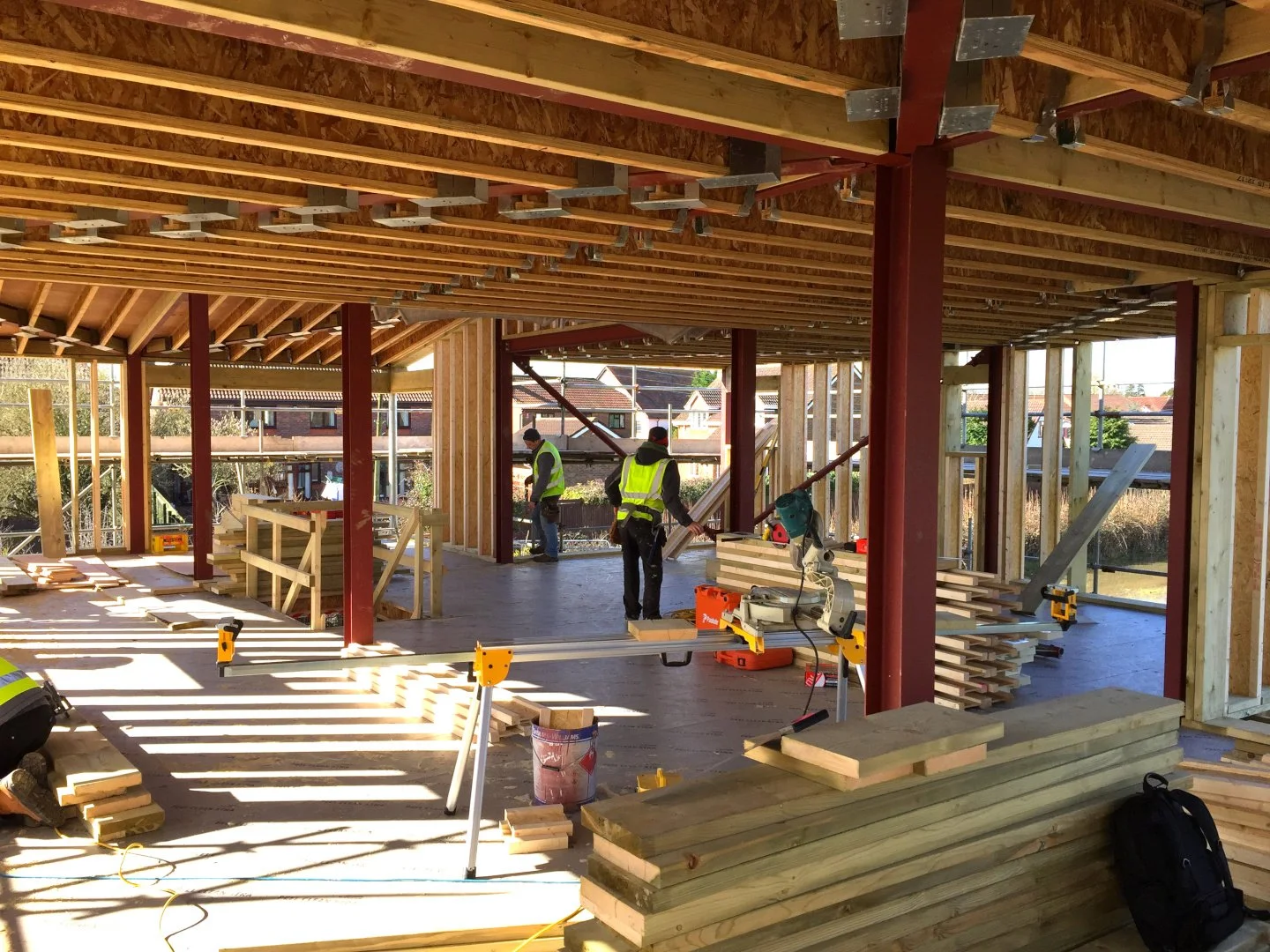
For clients who want complete support from feasibility through to construction, we offer a full architectural service. We take the project from initial assessment all the way through design, planning, building regulations, tender and construction administration, remaining your single point of contact throughout.
Award-Winning Architectural Firm
Founded in 2013 after 20 years at large practices, Dennis Hellyar Architects brings the rigour of a bigger firm with the personal service clients value most. We are registered with the Architects Registration Board and hold Certified Passive House Designer accreditation, making us well-placed to advise on energy performance and sustainability across all project types.
From residential extensions in Pontcanna to a £27M social housing regeneration scheme for Cardiff City Council, our track record speaks for itself. Our Cwrt Parc development won the Best Social Housing Award at the Building Excellence Awards 2020.

How We Approach Architectural Feasibility
A good feasibility study is not just a checklist of planning constraints. It requires both design thinking and planning knowledge working together, and for larger sites, an understanding of masterplanning principles and how a site can be developed in phases, applied by someone who understands the specific local context in which your project sits.
Dennis Hellyar Architects was founded in 2013 after Dennis spent 20 years at large architecture practices. That background means our feasibility assessments are informed by deep experience of what works in practice, not just what looks good on paper. We are a RIBA Chartered Practice and registered with the Architects Registration Board, and we hold Certified Passive House Designer accreditation, which means we can also advise on energy performance and sustainability at the feasibility stage where it is relevant.
We have particular depth of knowledge across the local planning authorities we work with most regularly: Vale of Glamorgan Council, Cardiff Council, City and County of Swansea, Neath Port Talbot Council and Bristol City Council. That local knowledge is not something that can be replicated by a practice that does not work regularly in these areas. We know how each authority thinks, what they prioritise in their assessments, and how to present proposals in a way that gives your project the best possible start.
Our approach to feasibility is direct and honest. We will tell you clearly what we think is achievable, what the risks are, and where we see opportunities. We do not over-promise to win work and we do not deliver vague advice that leaves you none the wiser. If a project faces significant challenges, you will know that after the feasibility stage, not after you have spent money on a full design.
Architectural Feasibility Studies Across South Wales and the South West
We carry out architectural feasibility studies for residential and commercial clients across a wide area of South Wales and the South West. Our studio is based in Barry, Vale of Glamorgan, and we work regularly across the following areas:
If your property or site is in an area not listed below, get in touch and we can confirm whether we cover your location.
Cardiff
Including all residential neighbourhoods and commercial areas across the city, with in-depth knowledge of Cardiff Council's planning policies, conservation areas and Article 4 designations.
Vale of Glamorgan
Our home patch, covering Barry, Penarth, Cowbridge, Llantwit Major, Dinas Powys and the rural Vale, including Heritage Coast and conservation area sites.
Swansea and Neath Port Talbot
Covering the city, Mumbles, the Gower AONB and the wider West Wales area, with experience of City and County of Swansea and Neath Port Talbot planning policies.
Bristol and the South West
Including South Gloucestershire, North Somerset and the M4 corridor, with knowledge of Bristol City Council's Article 4 directions, conservation areas and design expectations.
Wider South Wales
Including Newport, Monmouthshire, Bridgend and the Valleys, where we work on both residential and commercial projects.
Common Questions About Architectural Feasibility Studies
-
The cost of a feasibility study depends on the complexity of the site and the scope of advice required. A straightforward residential feasibility assessment will typically cost less than a complex commercial or multi-option study. We provide a clear, fixed fee before we begin, so you know exactly what you are committing to. Get in touch to discuss your project and we will give you a clear indication of likely costs.
-
Most residential feasibility studies can be completed within two to three weeks of instruction, depending on the complexity of the site and the planning research required. More complex commercial or multi-site feasibility work may take longer. We will give you a clear timescale at the start and keep you informed throughout.
-
A feasibility study is an internal assessment carried out by your architect to inform your decision-making. It does not involve the local planning authority and produces no formal planning outcome. A planning application is a formal submission to the local planning authority that results in a decision, typically approval or refusal. A feasibility study is what you do before a planning application, to make sure the application is worth making and is well-founded when it is submitted.
-
Not entirely, but it complements one well. A pre-application enquiry is a formal process where you ask the local planning authority for their view on a proposal. A feasibility study is an internal assessment that happens before that stage, to make sure the proposal you take to the council is the strongest possible one. We can advise on whether a pre-application enquiry is worth pursuing as part of the feasibility process, and can prepare and submit one on your behalf if so.
-
Not always, but it is often worth doing. For straightforward extensions on standard residential plots in non-sensitive locations, we can sometimes move straight to the design stage with reasonable confidence. But if your property is in a conservation area, is listed, is in a rural location, has an unusual plot shape, or has any planning history that might be relevant, a feasibility assessment first can save significant time and money. We can advise on whether a formal feasibility study is the right starting point for your specific project.
-
At the end of a feasibility study, you will have a clear written summary of our findings and recommendations. From there, the decision is entirely yours. You can choose to proceed with us into the design and planning stage, take our advice and use a different architect, pause the project, or decide not to proceed at all. There is no obligation to continue working with us after the feasibility stage, though many clients do.
If your question is not here, please visit our dedicated residential FAQs or commercial FAQs pages for more information.