House Extension Cardiff Services for Every Home and Budget
Making the Most of Your Home
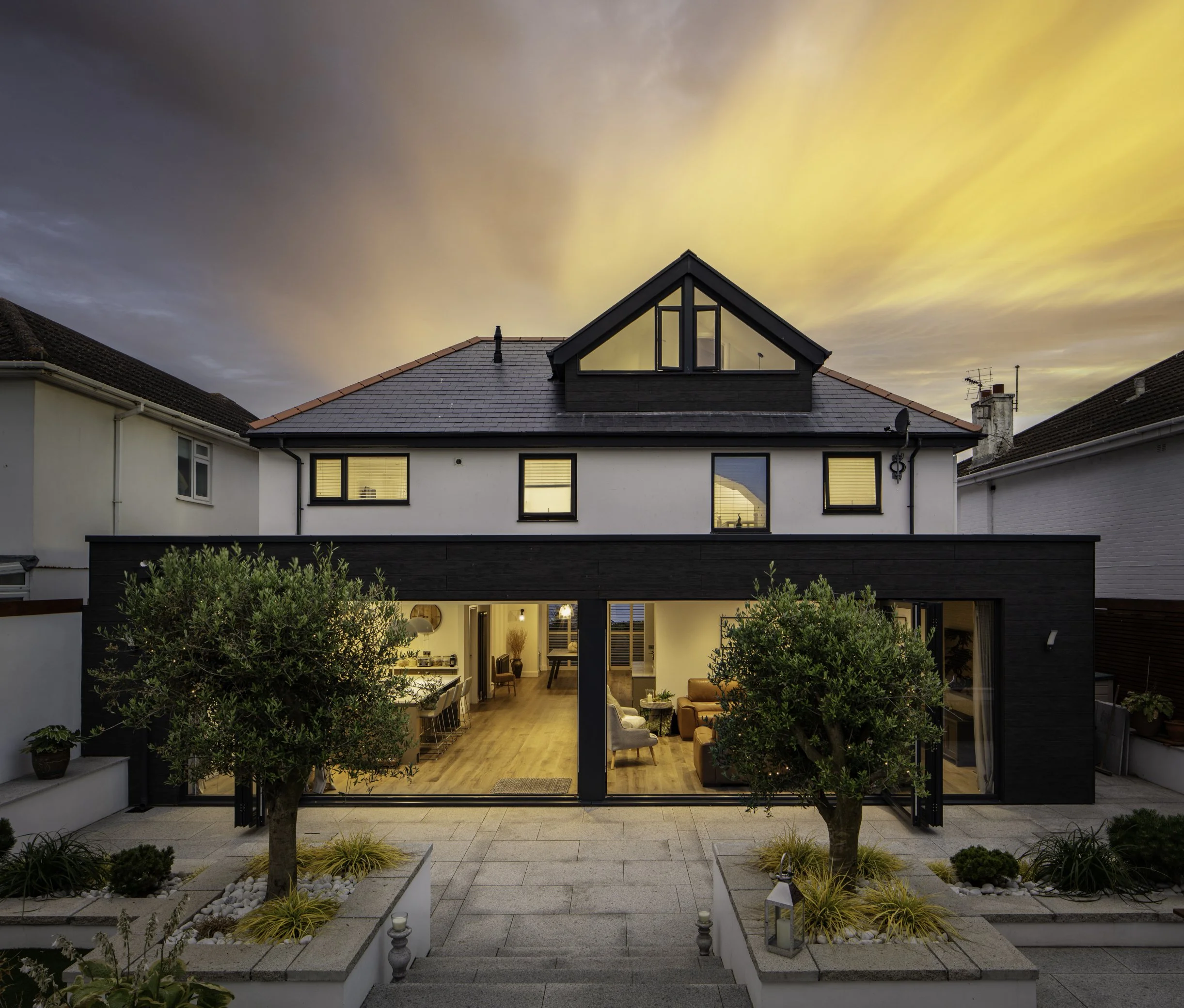
Dennis Hellyar Architects are RIBA chartered architects delivering house extension Cardiff services across the city. We know Cardiff's residential neighbourhoods, we understand Cardiff Council's planning policies and we have a track record of successful planning applications across the city. Whether it is a rear extension in Roath or a side return in Pontcanna, every house extension Cardiff project we take on is designed around your home, your family and your budget.
Cardiff's housing stock is one of the most varied in Wales. Victorian and Edwardian terraces in Pontcanna, Roath, Canton and Cathays. Interwar semis in Llandaff, Whitchurch and Rhiwbina. Postwar detached houses across the northern suburbs. Modern developments stretching from Cardiff Bay to the city's expanding fringe. Each property type, in each part of the city, brings its own opportunities and its own planning considerations.
We have been delivering house extension Cardiff projects for over a decade. That experience means we understand not just how to design a good extension, but how Cardiff Council thinks about planning applications, what it expects from designs in conservation areas, and how to prepare proposals that move through the planning process efficiently. We are based in Barry, just a short distance from Cardiff, and the city is one of our most active markets.
If you are a Cardiff homeowner thinking about extending, you are in the right place.
House Extension Cardiff Projects We Have Delivered
Here is a selection of residential extension projects we have delivered for Cardiff homeowners. Each one started with a conversation about what was possible.

Types of House Extension We Design in Cardiff
House extension Cardiff projects are among the most common work we deliver. Here are the extension types we design most frequently across Cardiff's residential neighbourhoods:
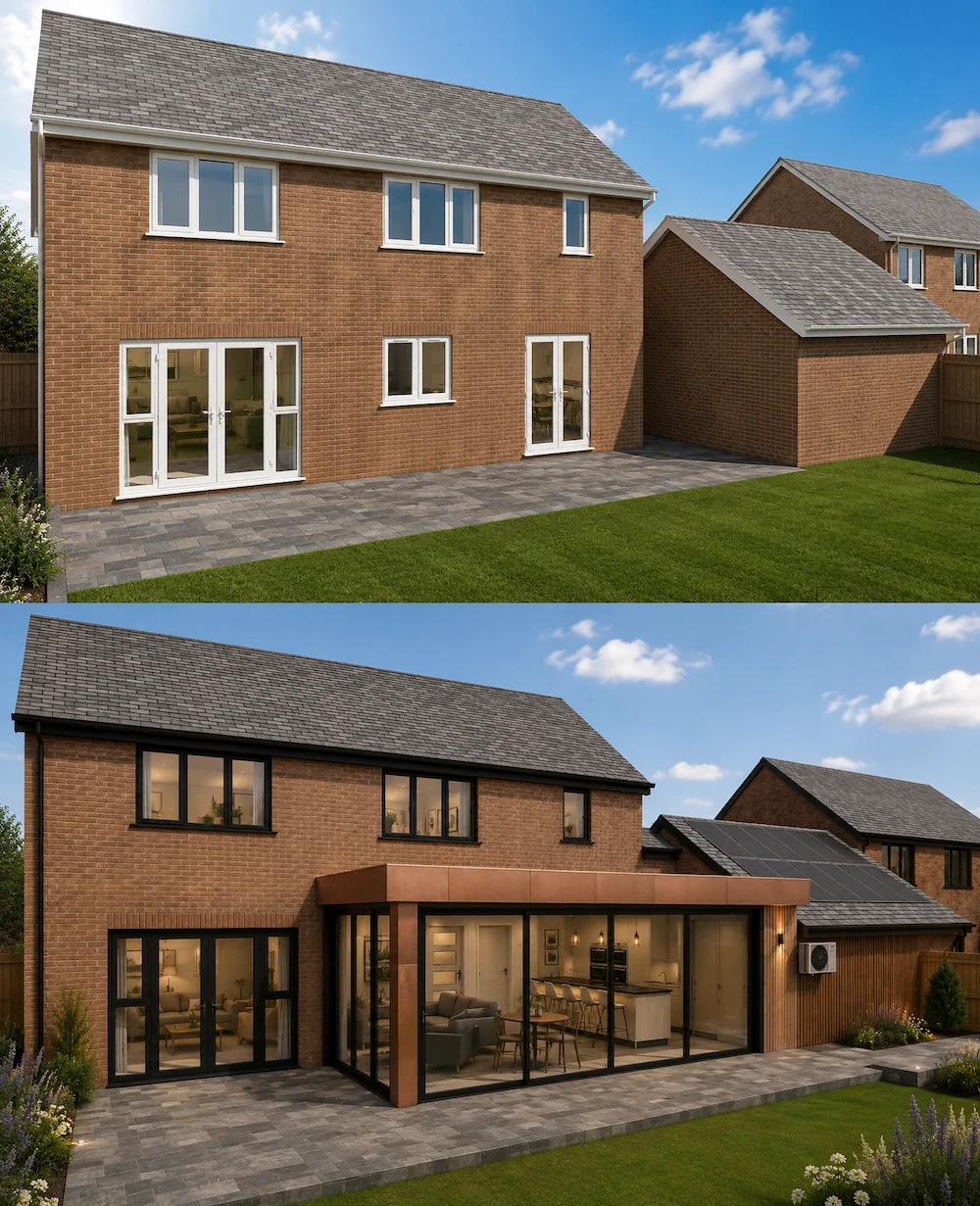
Rear House Extensions Cardiff
Rear extensions are the most popular house extension in Cardiff, particularly in the city's Victorian and Edwardian terraced streets. A well-designed rear extension opens up the ground floor, improves the connection between the kitchen and garden, and transforms how a family uses their home. We design rear extensions across all Cardiff postcodes, from modest single-storey additions in Cathays and Roath to larger contemporary extensions in Llandaff and Whitchurch.
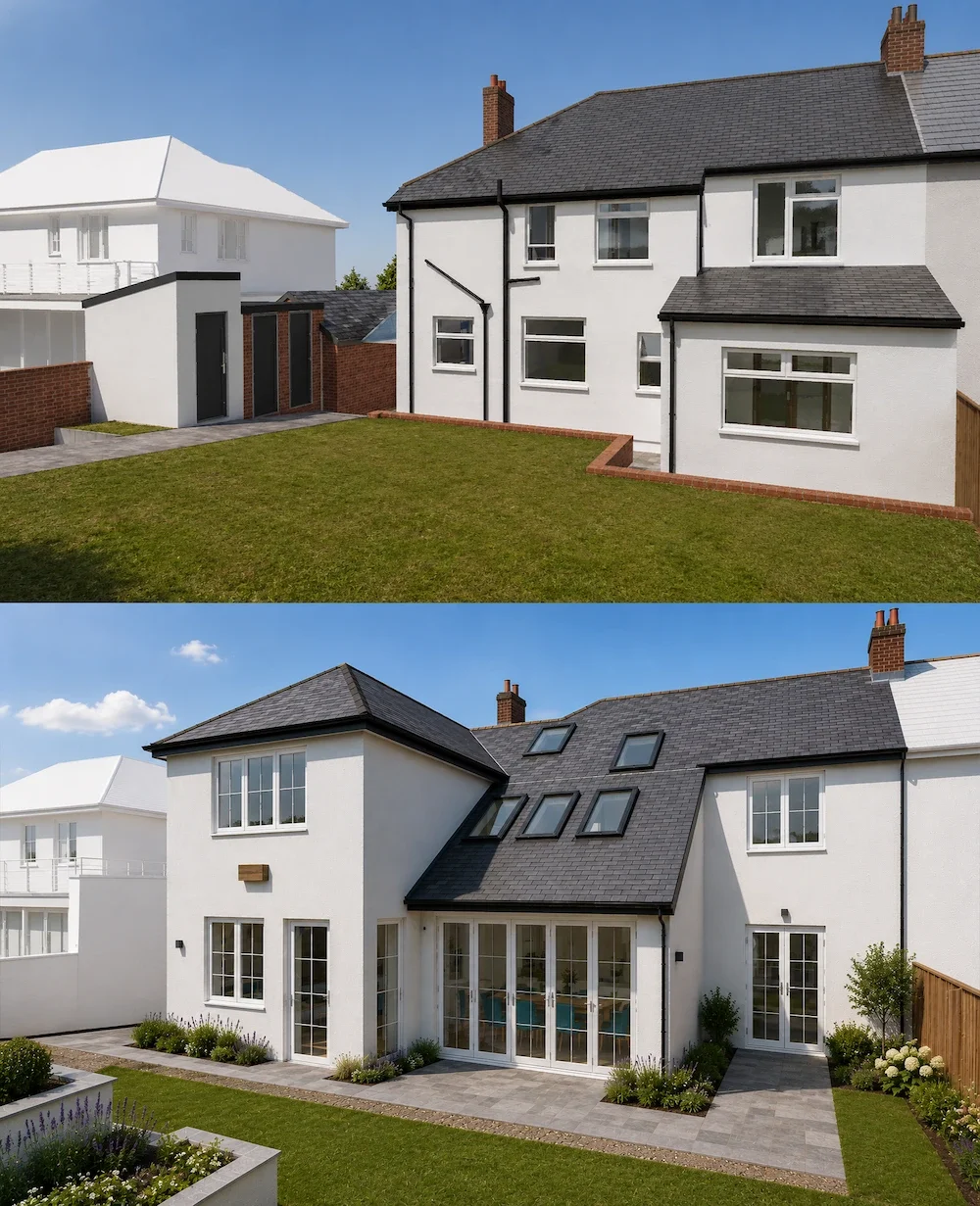
Wraparound House Extensions Cardiff
A wraparound extension combines a rear extension with a side return infill to create a single L-shaped addition across the back and side of the house. It is one of the most transformative options for Cardiff's terraced housing stock, often creating a large open-plan kitchen and living space where there were previously two separate, smaller rooms.
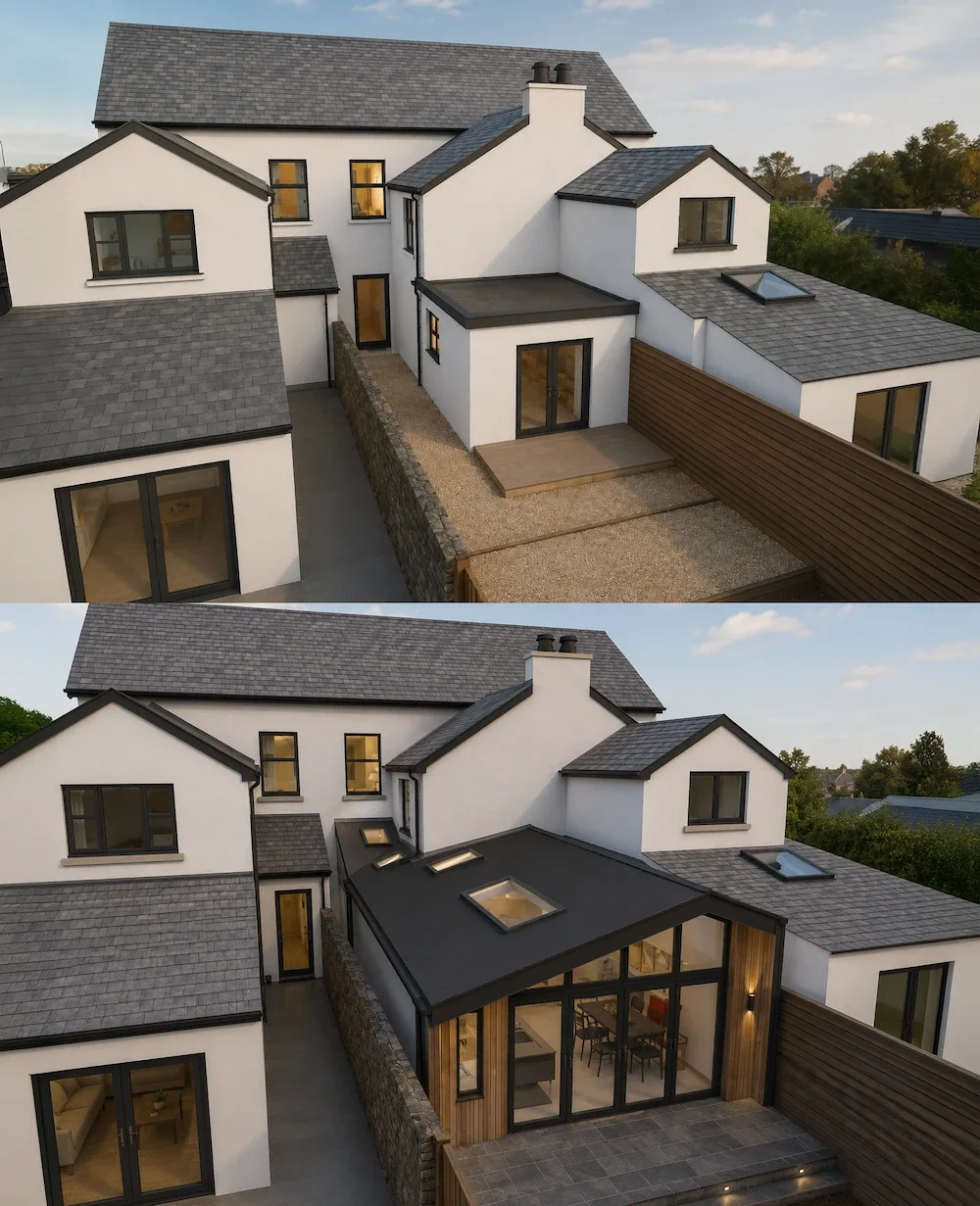
Infill Extensions in Cardiff
Many of Cardiff's Victorian and Edwardian terraces, particularly in Pontcanna, Roath, Canton and Cathays, have a narrow side return alongside the rear of the house. An infill extension fills this gap, adding width to a ground floor room that is otherwise dark and awkwardly proportioned.
Two-Storey Extensions in Cardiff
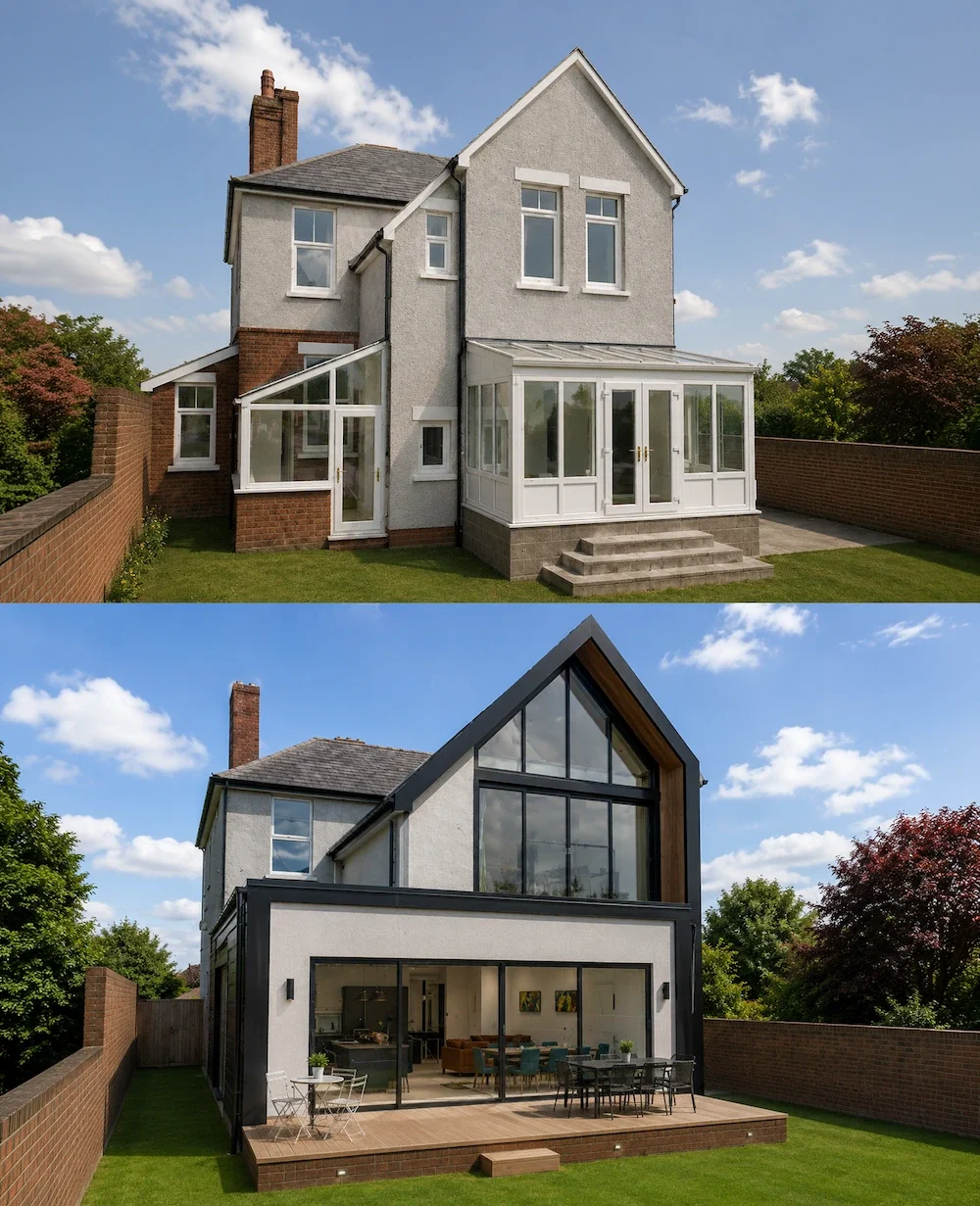
Two-storey extensions add space on both the ground and first floors and are among the most common larger house extensions in Cardiff's suburban areas. They are frequently used to add a ground floor kitchen and dining space with a bedroom and bathroom above. Two-storey extensions require full planning permission and careful design to ensure they are proportionate to the existing house and acceptable to Cardiff Council.
Loft Conversions in Cardiff
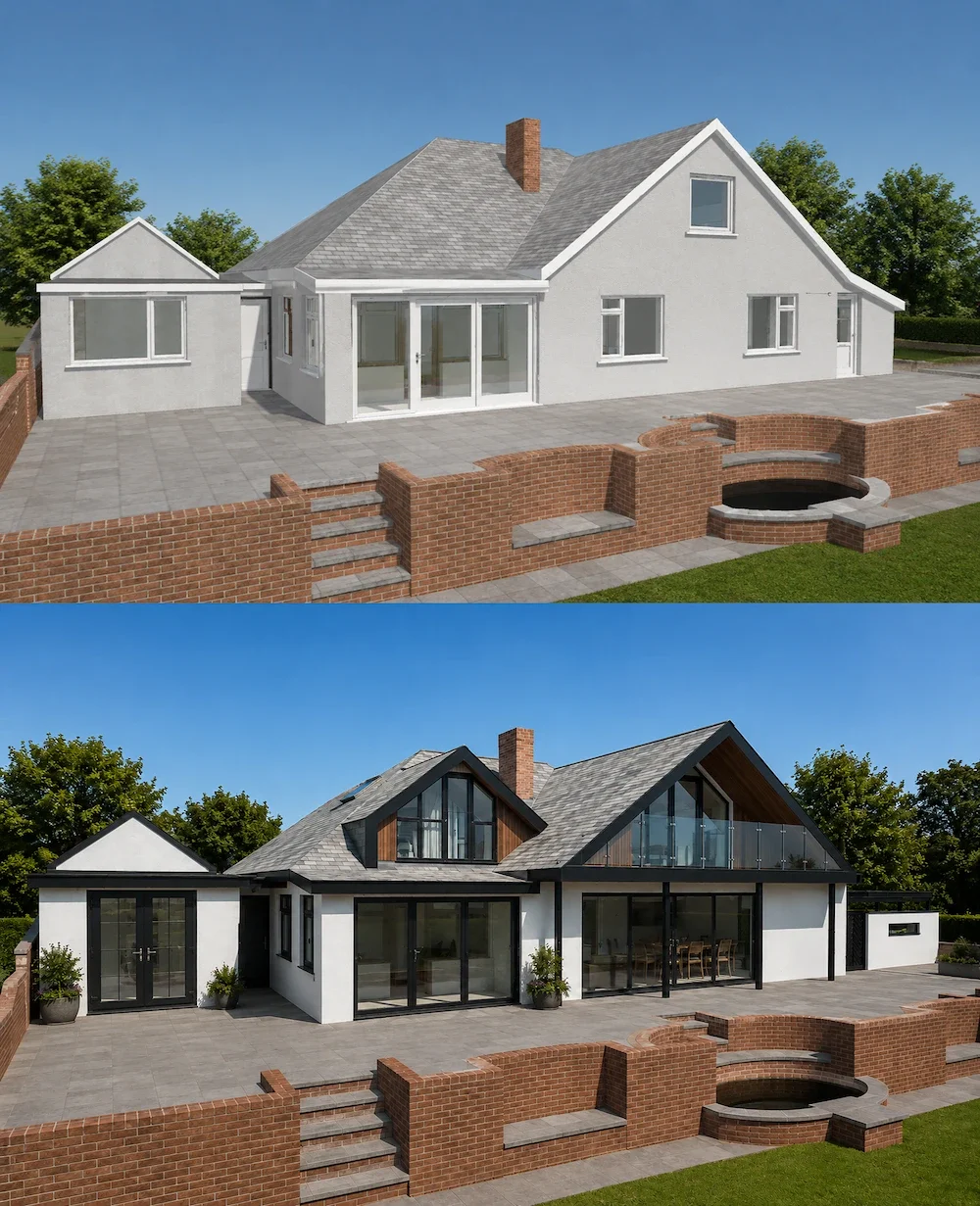
Loft conversions are a popular way to add a bedroom or home office to a Cardiff house without extending outward. Cardiff's terraced and semi-detached housing stock often has usable roof space that can be converted with a dormer extension or a hip-to-gable alteration. We design loft conversions across Cardiff, with particular experience in the conservation areas where roof alterations require sensitive design.
Period Extensions in Cardiff Conservation Areas
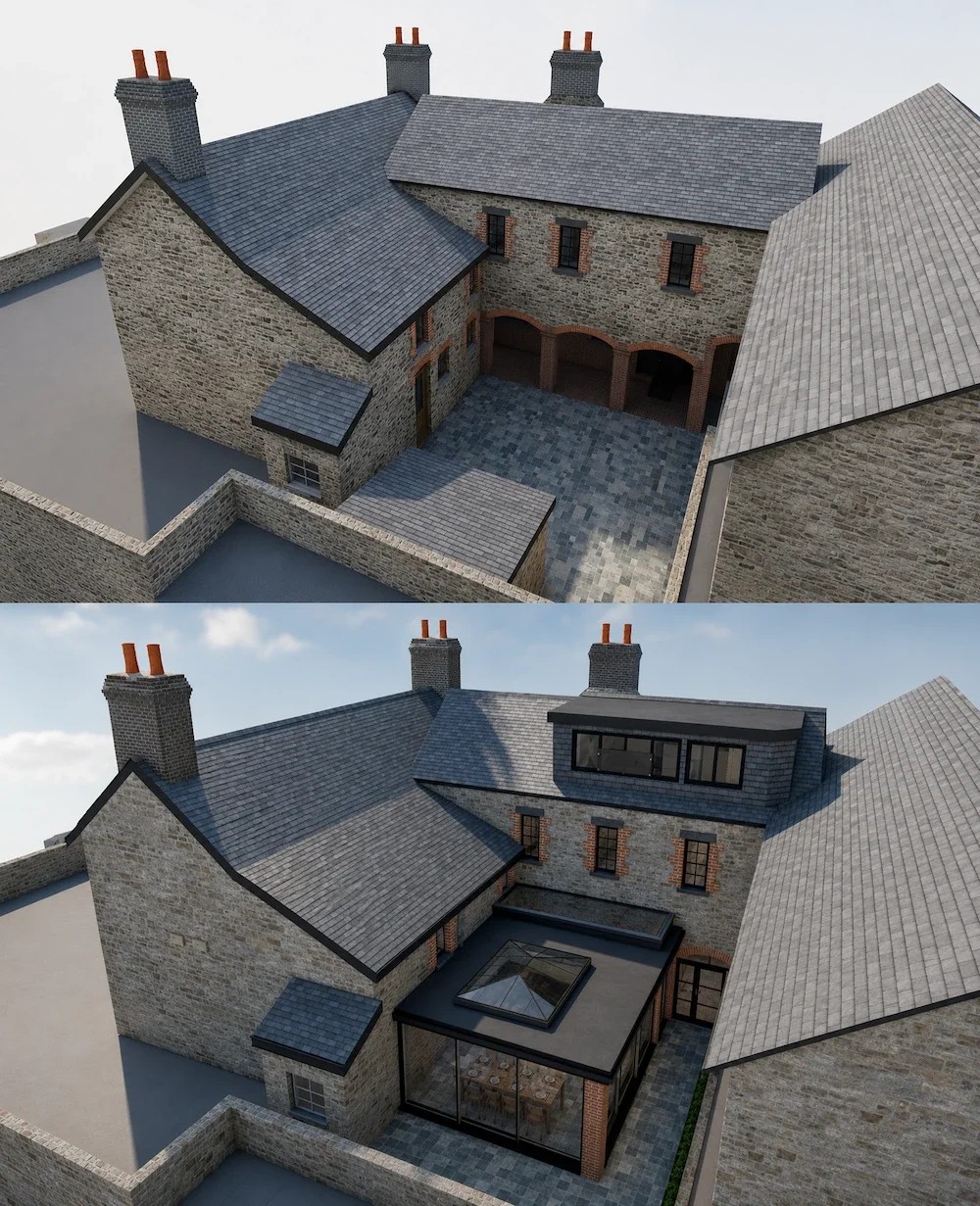
Cardiff has a significant number of conservation areas, including Pontcanna, parts of Roath, Canton, Llandaff and Cardiff Bay. Extensions in these areas require careful, sensitive design that responds to the character of the street and satisfies Cardiff Council's conservation area policies. We have extensive experience designing house extensions in Cardiff's conservation areas and preparing applications that meet the council's requirements while delivering what our clients need.
Over Structure Extensions in Cardiff
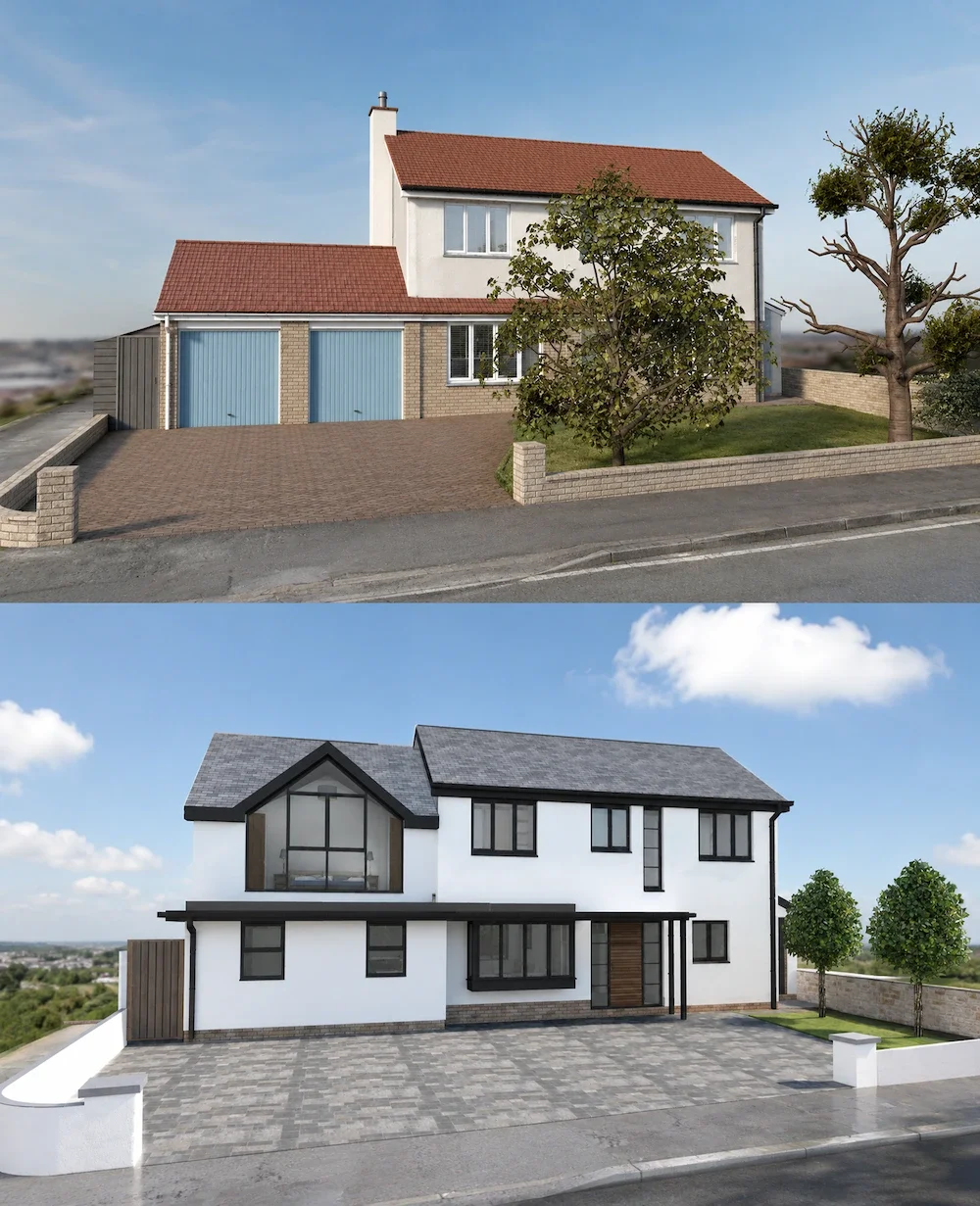
Some Cardiff properties, particularly those with an existing single-storey kitchen extension, garage or flat-roofed addition, have an opportunity to add a room above without extending the ground floor footprint. An over-structure extension makes use of a structure that is already there, adding a bedroom, bathroom or home office at first floor level. This type of extension requires a structural assessment to confirm the existing structure can take the additional load, and in many cases some strengthening work is needed before building up.
Award-Winning Architectural Firm
Founded in 2013 after 20 years at large practices, Dennis Hellyar Architects brings the rigour of a bigger firm with the personal service clients value most. We are registered with the Architects Registration Board and hold Certified Passive House Designer accreditation, making us well-placed to advise on energy performance and sustainability across all project types.
From residential extensions in Pontcanna to a £27M social housing regeneration scheme for Cardiff City Council, our track record speaks for itself. Our Cwrt Parc development won the Best Social Housing Award at the Building Excellence Awards 2020.

How Our Architects Work With You
If you have not worked with architects before, here is how our process typically works from first contact to completed project. Not every client needs all of these stages. We are equally happy to provide exactly the level of service your project requires.
Step 1: Initial conversation
We listen to what you are hoping to achieve and give you an honest early sense of what is possible for your Cardiff property, including any planning considerations we can identify from the outset. We want to ensure its a house extension Cardiff families can actually afford to build. No commitment required.
Step 2: Site visit and feasibility
We visit your Cardiff property, assess the site and review Cardiff Council's planning policies, Article 4 directions and any conservation area designations that apply. We give you a clear picture of your options before any design work begins.
Step 3: Design development
We develop the extension design in close collaboration with you, refining the layout, materials and detailing until the design is right. We use 3D visualisations so you can see the finished extension before anything is submitted to Cardiff Council.
Step 4: Planning drawings and submission
We prepare a professional set of planning drawings and supporting documents and submit the application to Cardiff Council on your behalf. We manage the process throughout the determination period, responding to queries and keeping you informed.
Step 5: Building regulations and construction
Once planning is approved, we can take the project through building regulations, contractor tender and construction if needed, remaining your single point of contact to the finished extension.
Ready to get started? An initial conversation with our architects costs nothing and will give you a much clearer picture of what your home extension could achieve.
Areas We Cover for House Extensions in Cardiff
Our house extension Cardiff service covers every neighbourhood and postcode in the city. Here are the main residential areas where we work most regularly and the specific considerations that apply in each:
Pontcanna, Canton and Roath
These inner-Cardiff terraced neighbourhoods are among our busiest areas for house extension work. The Victorian and Edwardian terraces here offer excellent scope for rear and side return extensions, but Pontcanna in particular sits within a conservation area where Cardiff Council applies detailed design guidance. We have strong experience preparing house extension applications in these neighbourhoods and understand what the council expects from proposals in the area.
Llandaff, Llandaff North and Whitchurch
These north-west Cardiff neighbourhoods feature a mix of Edwardian, interwar and postwar housing, with strong demand for both rear extensions and loft conversions. Parts of Llandaff sit within a conservation area. We work regularly in these areas and understand the character of the housing stock and the planning expectations of Cardiff Council for development here.
Rhiwbina, Heath and Llanishen
The northern Cardiff suburbs of Rhiwbina, Heath and Llanishen feature predominantly interwar and postwar semi-detached and detached houses. Extensions in these areas are generally more straightforward from a planning perspective than in Cardiff's inner conservation areas, but Cardiff Council still expects designs that respond to the character of the existing house and the street. We deliver extensions across these postcodes regularly.
Penylan, Cyncoed and the Eastern Suburbs
Penylan and Cyncoed are popular family neighbourhoods with a range of property types, from smaller terraces to larger detached homes. Extensions here often focus on opening up the ground floor and improving the connection to garden space. We work across the eastern Cardiff postcodes and have a good understanding of the planning considerations that apply in this part of the city.
Cardiff Bay and South Cardiff
Cardiff Bay and the southern Cardiff neighbourhoods include a mix of Victorian terraces and modern developments. Many of the modern developments in the Bay area were built with planning conditions that remove or restrict permitted development rights, meaning extensions often require a formal planning application. We check the planning history and conditions of every Cardiff Bay property we assess before advising on the best route forward.
Why Cardiff Homeowners Choose Dennis Hellyar Architects
RIBA Chartered Practice and ARB registered: professional accreditations that are your assurance of quality, conduct and accountability.
Over a decade of house extension experience in Cardiff: we have designed extensions across all of Cardiff's residential neighbourhoods, in all planning contexts, from standard permitted development additions to complex conservation area applications.
In-depth knowledge of Cardiff Council planning policies: we know how Cardiff Council assesses applications, what it expects in conservation areas and where Article 4 directions apply. That knowledge makes a real difference to the outcome of your application.
Based close to Cardiff in Barry: we are easily accessible to Cardiff clients and closely familiar with the city. No travel surcharges, no delays waiting for site visits.
Practical, buildable designs within your budget: we design extensions that can be built within your budget and that will work well for your family over time.
Personal service throughout: you work directly with experienced architects from the first conversation to the finished extension. Your project is never passed to juniors.
Honest about costs and timescales: a clear fee proposal before we start and a realistic programme from the outset.
Planning Permission for House Extensions in Cardiff
Understanding Cardiff Council's approach to planning permission is one of the most valuable things we bring to a house extension Cardiff project. Here is what homeowners need to know.
Permitted development in Cardiff
Many smaller house extension Cardiff projects can be carried out under permitted development rights, which allow certain works to proceed without a formal planning application. Rear extensions of up to 4 metres on detached houses and 3 metres on other house types are often permitted development, subject to conditions on height, materials and relationship to boundaries. However, permitted development rules are complex and have specific exceptions that catch many Cardiff homeowners out.
Cardiff's Article 4 directions
Cardiff Council has issued Article 4 directions in several parts of the city, which remove permitted development rights from properties in those areas. This means that works you might expect to carry out without planning permission may require a formal application if your property falls within an Article 4 area. We check every Cardiff property we work on for Article 4 designations before advising on the planning route.
Conservation areas in Cardiff
Cardiff's conservation areas place additional restrictions on permitted development. In a conservation area, works to the side elevation of a house, roof alterations, cladding and certain other works require planning permission even if they would be permitted development elsewhere. Cardiff Council's conservation area character appraisals set out the specific design expectations for each area, and we are well-versed in what each one requires.
Cardiff Council planning timescales
Cardiff Council aims to determine most householder planning applications within 12 weeks of a valid submission. We prepare applications that are complete and well-presented from the outset, which minimises the risk of the council requesting further information and extending the determination period. We keep you informed throughout the process and respond promptly to any queries from the case officer.
Common Questions About House Extensions in Cardiff
-
It depends on the size, type and location of your extension. Many smaller extensions in Cardiff fall under permitted development and do not need a planning application. However, Cardiff Council's Article 4 directions remove permitted development rights in parts of the city, and properties in conservation areas face additional restrictions. We can assess your Cardiff property quickly and confirm exactly what is needed.
-
Cardiff Council aims to determine most householder planning applications within 12 weeks of a valid submission. We prepare applications that are complete and clearly presented from the outset to minimise the risk of delays. We keep you updated throughout the process and manage any queries from the planning officer on your behalf.
-
Build costs for house extensions in Cardiff typically range from around £1,500 to £2,500 per square metre depending on specification, complexity and market conditions. A modest single-storey rear extension might cost from £40,000 to £80,000 to build. A two-storey extension will typically cost more. We can give you indicative cost guidance as part of our feasibility assessment, so you have a realistic sense of the total investment before committing to detailed design work.
-
Yes. We have extensive experience designing house extensions in Cardiff's conservation areas, including Pontcanna, parts of Roath, Canton and Llandaff. Extensions in conservation areas require more careful design and a good understanding of Cardiff Council's conservation area policies. We are well-versed in what the council expects and have a strong track record of securing planning approval in these sensitive locations.
-
Possibly, but it depends on the size of the extension and the specific location of your property. Many Cardiff terraces can accommodate a small rear extension under permitted development, but if your property is in a conservation area, an Article 4 area, or has had permitted development rights removed by a planning condition, a formal application will be needed. We can check your specific property and give you a clear answer.
-
The easiest way to get started is to get in touch for an initial conversation. We will ask you some questions about your property, your ideas and your budget, and give you a straightforward early view of what is likely to be possible. There is no obligation at this stage and no fee for the initial conversation. From there, we can agree the right level of service for your project and get started.
If your question is not here, please visit our dedicated residential FAQs page for more information.