
Social Housing Development – Why Professional Architectural Design Matters: Creating Communities That Work
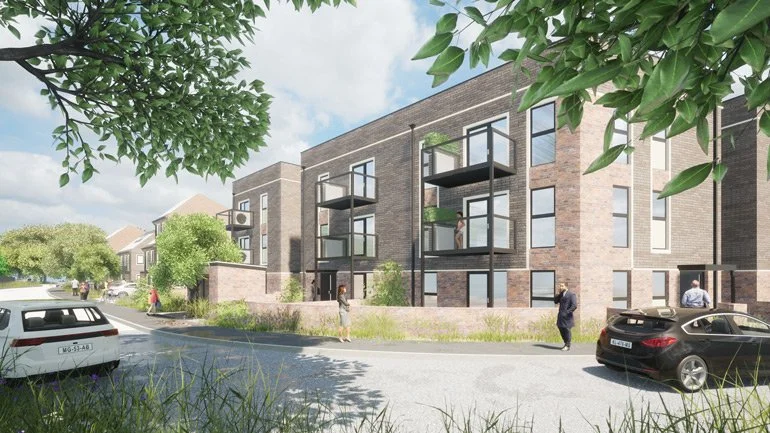
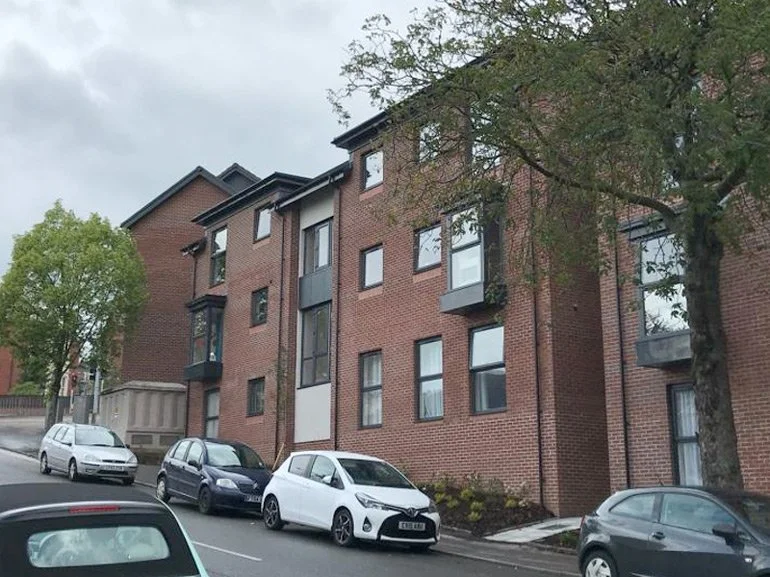
Ffordd Y Millennium social housing development, street view
Social housing represents more than just bricks and mortar. It creates the homes where families grow, where children play, where communities form and thrive. Yet too often, social housing developments fall short of their potential – creating estates that feel institutional rather than welcoming, homes that cost too much to heat, or communities that fail to function properly. The difference between social housing that merely houses people and developments that create genuine communities almost always comes down to one factor: quality architectural design from the outset.
Our Current Work: We're currently involved with two social housing developments in South Wales. One project nearing completion in Cardiff, and another recently commenced on site at Ffordd Y Mileniwm in Barry – a 56-unit development providing much-needed affordable housing for Hafod Housing Association and Lynwood Investments. These projects demonstrate how thoughtful architectural design creates social housing that residents are genuinely proud to call home.
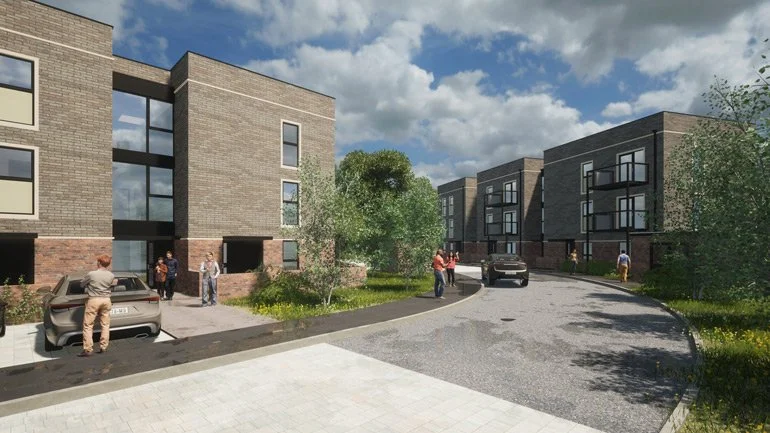
Ffordd Y Millennium Social Housing Scheme, street view
What Is Social Housing and Why Does It Matter?
Social housing, or affordable housing as defined by Welsh Government Technical Advice Note 2, refers to housing where secure mechanisms ensure it remains accessible to those who cannot afford market housing, both on first occupation and for subsequent occupiers. This includes social rented housing provided by local authorities and Registered Social Landlords, as well as intermediate housing where prices or rents sit between social rents and market rates.
Wales needs thousands of additional affordable homes. The Welsh Government has committed to delivering 20,000 new low-carbon social homes by 2026. Meeting this target requires not just quantity but quality – homes that are affordable to build, economical to run, comfortable to live in, and create communities where people want to be.
This is where architects become essential. Social housing development faces unique challenges: tight budgets, demanding specifications, complex funding structures, community sensitivities, and the need to create homes that remain viable for decades. Navigating these successfully requires specialist expertise that goes far beyond standard residential design.
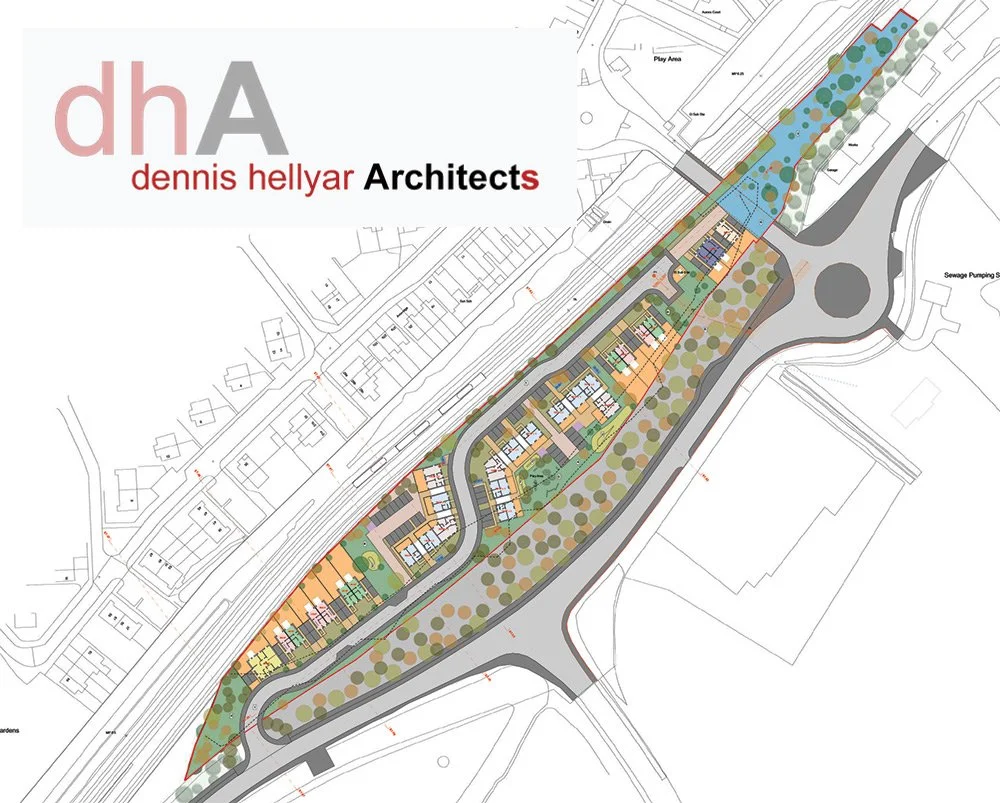
Ffordd Y Millennium social housing scheme masterplan
Designing for Community, Not Just Housing Units
The fundamental difference between institutional social housing and thriving communities lies in how developments are conceived and designed. Poor social housing simply arranges dwelling units to maximize numbers within budget constraints. Quality social housing designs communities where people can live well.
Site Planning That Creates Community
How buildings are positioned on a site fundamentally shapes community life. Architects consider how layout creates natural gathering points, overlooking that provides security without feeling oppressive, connections between homes and communal spaces, private outdoor space for every home, and safe play areas visible from homes.
Our Ffordd Y Mileniwm project in Barry demonstrates this approach. On a challenging 1.6-hectare brownfield site (former railway sidings), we've designed a mixed community of 30 one-bedroom apartments, 12 two-bedroom apartments, and 14 houses ranging from two to four bedrooms. This mix ensures the development works for singles, couples, and families – creating a balanced community rather than housing one demographic exclusively.
The masterplan includes approximately 0.3 hectares of open space, integrating sustainable drainage infrastructure with a 250 square metre equipped play area. This isn't token open space tacked on to meet planning requirements – it's designed as the community's heart, creating places where neighbors naturally meet and children can play safely.
Community Mix Matters: Developments with varied housing types (apartments and houses, different bedroom counts) create more resilient communities than single-type developments. Young people can remain in the community as their needs change, families can downsize locally as they age, and the social mix prevents the stigmatization that often affects single-type estates.
Building Heights and Visual Integration
Social housing developments often face skepticism from neighboring communities. Sensitive design that responds to context while meeting density requirements is crucial for planning success and community acceptance.
At Ffordd Y Mileniwm, the elevated site position required careful height management. We've limited buildings to three storeys maximum, with a single-storey bungalow positioned at the eastern edge to reduce visual dominance toward neighboring properties. This graduated approach respects the context while delivering the housing density required for project viability.
Thoughtful landscaping and strategic tree retention further soften visual impact. These details matter enormously – developments that feel "parachuted in" without regard for context generate opposition, while those designed to sit comfortably within their setting gain community support.
Meeting Welsh Development Quality Requirements
Social housing in Wales must meet the Welsh Government Development Quality Requirements (WDQR) 2021 – a comprehensive set of standards covering space, accessibility, energy efficiency, and sustainability. These requirements are demanding, and meeting them requires detailed knowledge and careful design integration.
Space Standards That Work
WDQR specifies minimum space standards substantially higher than standard Building Regulations. These aren't arbitrary – they're based on research into what space people actually need to live comfortably. A two-bedroom, four-person apartment requires minimum 70 square metres; a three-bedroom, five-person house needs minimum 93 square metres.
Architects ensure these space standards are met not just on paper but in reality. Room dimensions must accommodate furniture properly. Circulation space must allow easy movement. Storage must be genuinely usable. We see development proposals that technically meet space requirements but have awkwardly proportioned rooms or unusable storage. Technical compliance isn't enough – spaces must actually work for daily life.
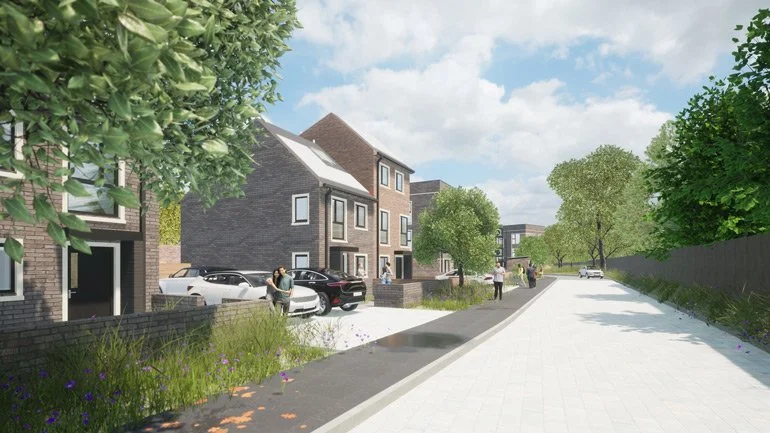
Ffordd Y Millennium social housing scheme in Barry, street view
Accessibility for All
WDQR requires that all homes meet accessibility standards allowing adaptation for changing needs. This means level or ramped access to all homes, adequate circulation space for potential wheelchair use, ground floor bathrooms suitable for adaptation, and structural provision for future stairlifts or through-floor lifts where required.
These requirements add construction complexity and cost, but they're essential for creating homes that remain suitable throughout residents' lives. Designing for accessibility from the outset is far more effective than attempting to retrofit later, which is often impossible or prohibitively expensive.
Energy Efficiency: Reducing Running Costs for Residents
For social housing residents, often on limited incomes, energy costs represent a significant portion of household budgets. Poor energy efficiency doesn't just cost money – it forces impossible choices between heating and other necessities, with serious health implications.
Low-Carbon Homes: Not Optional, Essential
The Welsh Government's commitment to 20,000 low-carbon social homes reflects recognition that energy efficiency is a social justice issue. WDQR 2021 sets demanding energy performance standards, and developments receiving Social Housing Grant must achieve EPC ratings of A or B.
Achieving these standards requires integrated design from the start. Fabric-first approach with exceptional insulation and airtightness, passive solar design optimizing building orientation and glazing, efficient heating systems (typically air source heat pumps), mechanical ventilation with heat recovery (MVHR), and LED lighting throughout are essential elements.
At Ffordd Y Mileniwm, energy efficiency has been central to design decisions. The elevated site position provides solar access we've exploited through careful orientation. Building forms minimize exposed surface area while maximizing internal space. Insulation specifications substantially exceed Building Regulations minimums. These measures cost more upfront but deliver energy savings every year for decades.
Future-Proofing Against Rising Energy Costs
Energy costs have risen significantly in recent years and are unlikely to decrease substantially long-term. Housing designed today will still be occupied in 2050 and beyond. Designing to merely meet today's minimum standards creates homes vulnerable to fuel poverty as energy costs continue to rise and regulations tighten.
Low-carbon homes built to current best practice can use a fraction of the energy required by older social housing properties – dramatically reducing running costs for residents. Progressive social housing providers recognize that investing in superior energy efficiency now protects residents against future cost increases while reducing carbon emissions. This requires architectural expertise in building physics, thermal modeling, and system integration that goes well beyond standard residential practice.
Sustainability: Environmental and Economic
Sustainability in social housing encompasses environmental responsibility and long-term economic viability. Social housing providers need buildings that minimize environmental impact while remaining affordable to build, economical to operate, and durable enough to serve communities for generations.
Material Choices and Lifecycle Costs
Social housing requires material specifications that balance initial cost against durability and maintenance requirements. Cheap materials that need replacement after 10-15 years prove expensive over 60-year building lifespans. Architects understand which specifications deliver value across building lifecycles.
External wall systems must be durable, weather-resistant, and low-maintenance while achieving excellent thermal performance. Window specifications must balance cost against performance, security, and longevity. Roof coverings must last 40+ years without major intervention. Internal finishes must withstand hard use while remaining cost-effective. These decisions require detailed specification knowledge and experience of what actually performs well in social housing contexts.
Brownfield Regeneration
Many social housing developments, like Ffordd Y Mileniwm, occupy brownfield sites – previously developed land being returned to use. These sites present challenges absent from greenfield development: potential contamination requiring remediation, existing structures requiring demolition, services infrastructure needing relocation or upgrading, and often constrained access complicating construction.
Brownfield development is inherently more sustainable than greenfield, preserving undeveloped land while regenerating derelict sites. However, brownfield sites require specialist input to navigate complexities successfully. Architects coordinate site investigations, work with environmental consultants on contamination strategies, develop demolition and construction phasing, and design to accommodate constrained site conditions.
The former railway sidings at Barry presented typical brownfield challenges – contamination concerns, existing infrastructure, elevated position, and access constraints. Addressing these required detailed site analysis and careful design integration, but the result transforms previously derelict land into a thriving residential community.
Navigating Planning and Funding Requirements
Social housing developments face complex regulatory and funding requirements that demand specialist navigation. Planning approval is never guaranteed, and developments often face scrutiny from local communities understandably concerned about impact on their neighborhoods.
Achieving Planning Consent
Social housing applications require particularly careful preparation. Local planning authorities assess compliance with local planning policies, affordable housing policies, design quality expectations, highways and parking requirements, drainage and utilities capacity, and environmental impact.
We prepare applications that address all material considerations comprehensively, anticipating concerns before they become objections. For Ffordd Y Mileniwm, this meant detailed visual impact assessments demonstrating how graduated building heights and landscaping minimize impact, traffic studies showing the development's highway implications are manageable, drainage strategies integrating sustainable drainage systems, and design statements explaining how the proposals meet planning policy requirements and create quality placemaking.
The application was granted outline planning permission, validating the design approach and allowing detailed design development to proceed. This planning success wasn't automatic – it resulted from thorough site analysis, design that genuinely responds to context and constraints, and comprehensive application preparation demonstrating compliance and quality.
Social Housing Grant and Development Funding
Most social housing developments rely on Social Housing Grant from Welsh Government to achieve financial viability. Grant funding comes with stringent requirements: compliance with WDQR standards, achievement of specified energy performance, meeting space and accessibility standards, and delivery within approved timescales and budgets.
Architects ensure designs meet grant requirements from the outset, avoiding costly redesigns or, worse, grant withdrawal. We work with housing associations to develop compliant designs that achieve funding while delivering quality homes. This requires understanding not just architectural design but the financial and regulatory frameworks within which social housing operates.
Construction Quality and Contract Administration
Design quality means nothing if construction doesn't deliver what drawings specify. Social housing's long service life demands construction quality that ensures buildings perform well for decades.
Detailed Documentation
Social housing construction requires exceptionally detailed documentation. Contractors need clear, comprehensive specifications and drawings to price accurately and build correctly. Ambiguous documentation leads to contractor queries, variations, and disputes that delay programs and increase costs.
We produce detailed construction drawings and specifications that leave no room for misinterpretation. This includes comprehensive material specifications, construction details showing critical junctions and interfaces, thermal performance specifications with supporting calculations, accessibility features fully detailed, and M&E system requirements clearly defined.
This documentation allows contractors like JG Hale Construction (our main contractor at Ffordd Y Mileniwm) to understand exactly what's required and price accordingly. Clear documentation protects housing associations from variations and ensures delivered quality matches design intent.
Construction Monitoring
Contract administration during construction ensures built reality matches design intent. For social housing, where homes must serve residents for decades, construction quality is paramount. We provide regular site inspections, review contractor submissions and samples, certify works before payment, identify and resolve construction issues promptly, and ensure compliance with building regulations and WDQR requirements.
This oversight protects housing associations' investment and ensures residents receive homes built to specification. Problems caught during construction are far cheaper to resolve than defects discovered after occupation.
Creating Homes People Are Proud to Call Home
Social housing carries stigma in some quarters – seen as second-class housing for people with no choice. This stigma harms residents' wellbeing and perpetuates social divisions. Quality design challenges this stigma by creating homes indistinguishable from market housing in appearance and comfort.
Architecture That Doesn't Scream "Social Housing"
The best social housing looks simply like good housing. Materials, detailing, and external appearance should be indistinguishable from market housing. When social housing announces its tenure through cheap specifications or institutional aesthetics, it reinforces stigma and undermines community integration.
We design social housing that residents can be proud of. Quality materials used thoughtfully, careful detailing that creates visual interest without excessive cost, landscaping that creates attractive settings, and internal spaces that feel generous and well-considered all contribute to developments people are pleased to call home.
This isn't about luxury – it's about dignity. Everyone deserves a home that feels genuinely theirs, regardless of tenure. Architectural design that respects residents delivers this.
Community Facilities and Play Provision
Social housing developments work better when they include appropriate community facilities. This might mean equipped play areas for children, communal gardens for residents, secure cycle storage, and communal spaces for community activities. These facilities create opportunities for community interaction and support wellbeing.
At Ffordd Y Mileniwm, the equipped play area provides safe space for the 14 family houses' children while creating a natural gathering point for parents. This social infrastructure is as important as the physical infrastructure of roads and drains.
Working with Housing Associations and Development Partners
Social housing development involves multiple partners with distinct roles and perspectives: housing associations managing developments and future operations, development partners providing sites or funding, contractors delivering construction, local authorities providing planning consent and housing strategy input, and Welsh Government providing funding and setting standards.
Architects act as coordinators, translating between these stakeholders and ensuring everyone works toward shared objectives. We understand housing associations' operational requirements, development economics, planning authority priorities, and construction realities. This multidisciplinary perspective allows us to navigate complex projects successfully.
Our work with Hafod Housing Association and Lynwood Investments on Ffordd Y Mileniwm demonstrates this collaborative approach. We've designed a development that meets the housing association's operational requirements and standards, satisfies the development partner's financial requirements, achieves planning consent from Vale of Glamorgan Council, complies with Welsh Government grant requirements, and allows the contractor to deliver efficiently within budget.
This requires understanding and respecting each stakeholder's perspective while keeping focus on the ultimate objective: creating quality homes for people who need them.
The Real Cost of Poor Design
The temptation in social housing is to minimize upfront investment in design, seeing it as an avoidable expense. This thinking is profoundly false economy. Poor design in social housing costs far more in the long term through wasted space adding unnecessary construction cost, poor energy efficiency creating fuel poverty for residents, inadequate community design creating estates that don't function socially, planning refusals or challenges causing expensive delays, and construction problems from inadequate documentation.
More fundamentally, poor design creates homes where people struggle rather than thrive. The social cost of badly designed social housing – in health impacts, community dysfunction, and social division – vastly exceeds any saving on initial design investment.
Investment in Quality Design: Professional architectural services deliver developments that work properly, meet all regulatory requirements, achieve planning consent efficiently, minimize construction problems and variations, optimize space and energy efficiency, and create communities where residents can live well. Quality design is an investment that pays dividends throughout the building's lifetime.
Why Dennis Hellyar Architects for Social Housing?
Parc Cwrt development on the corner of Gladstone Road and Tynewydd Road, Barry
Social housing development requires specialist expertise beyond general residential architecture. We bring specific capabilities that deliver successful social housing projects:
Technical Expertise: Deep understanding of WDQR requirements, Social Housing Grant processes, and Welsh planning policies ensures compliant design that achieves funding and consent.
Energy Performance: Our Passivhaus certification and sustainability focus means we deliver genuine low-carbon homes that protect residents from fuel poverty while meeting Welsh Government's environmental objectives.
Community Design: We design communities, not just housing units. Our projects create places where people want to live and where communities can thrive.
Local Knowledge: Extensive experience across South Wales means we understand local planning authorities, housing associations, contractors, and site conditions. We know what works in this region.
Collaborative Approach: We work effectively with housing associations, development partners, contractors, and local authorities. Social housing's complexity demands genuine collaboration, which we deliver.
Most importantly, we care about creating housing that genuinely serves residents' needs. Social housing is too important to get wrong – it shapes people's lives for decades. We approach every project with that responsibility firmly in mind.
Creating Social Housing That Works
Wales needs thousands of additional social homes. Meeting this need requires developments that deliver quality alongside quantity – homes that are affordable to build, economical to run, comfortable to live in, and create thriving communities.
Professional architectural design is essential for achieving these objectives. Architects bring the technical expertise, design skill, and collaborative capability required to navigate social housing's unique challenges while creating developments that genuinely serve residents and communities.
Our current work in Cardiff and Barry demonstrates this commitment. The Ffordd Y Mileniwm development transforms former railway sidings into a mixed community providing 56 much-needed affordable homes. Through careful design that responds to site challenges, meets stringent regulatory requirements, and creates genuine community, we're delivering social housing that residents will be proud to call home.
Social housing development is complex, demanding, and vitally important. It requires specialist expertise and genuine commitment to creating homes that work. If you're a housing association, local authority, or development partner planning social housing in South Wales, we'd welcome the opportunity to discuss how our experience and expertise can help deliver successful developments that truly serve communities.
Working on social housing development? Contact us to discuss how thoughtful architectural design can help you create communities that work, homes that residents value, and developments that deliver lasting value for all stakeholders.